

Highlights

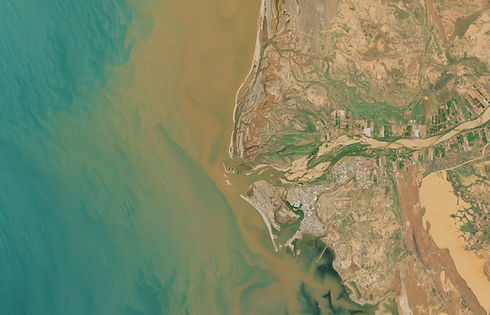
Using long-term data from California and New Zealand, researchers documented darkwaves up to two months in duration, with light levels dropping close to 100 per cent compared to normal conditions.
Dr Shinae Montie, from The University of Western Australia’s Oceans Institute and School of Biological Sciences, said the loss of underwater light had cascading effects throughout marine ecosystems.
Light reduction affects everything from the productivity of kelp forests and seagrass meadows to the behaviour, reproduction and survival of fish and other animals,” Dr Montie said.


Earlier this year, our in-house molecular ecologist Dr. Antoine Minne joined other researchers and artists to talk everything kelp and how it can bring scientists and artists together.


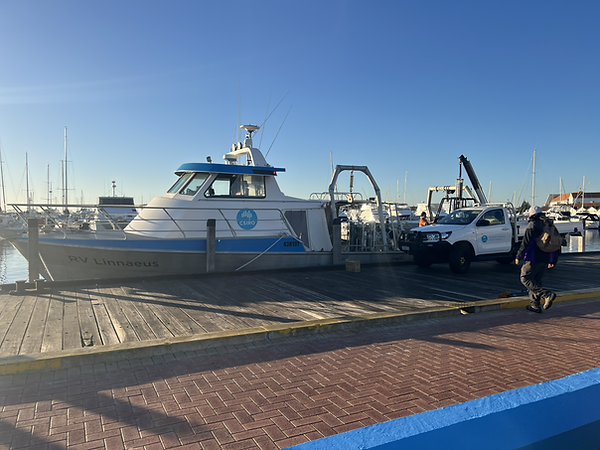


At the end of June, the GEcoKelp team welcomed Dr Shinae Montie from the University of Western Australia to the IMR research station in Arendal. Shinae, Antoine and Hannah had received collaborative funding to develop and test ta novel heatpad set-up used in Shinae's PhD research in Norway
Read more at- https://www.gecokelp.org/highlights
.jpg)
.jpg)
.jpg)


In April, researchers from the University of Western Australia, Flinders University and the University of Sydney came together in a rare and ambitious collaboration to resurvey the reefs and seagrass meadows of the Bremer Bay region along Western Australia’s remote south coast.
Known to ocean lovers for its iconic weedy and leafy seadragons, and as a gateway to the Bremer Canyon where killer whales gather, the region is also a marine biodiversity hotspot that remains under-researched due to remoteness. Many of these ecosystems were last surveyed more than 30 years ago.
This renewed effort is driven by concerns over excess heat being accumulated in this area potentially deleterious for many GSR endemic species residing in the area. In remote regions like Bremer Bay, limited long-term data makes it difficult to understand their impacts. By revisiting historical sites, researchers aim to detect ecological change and establish updated baselines for future monitoring.
Across the expedition, teams surveyed 11 reef sites and 7 seagrass sites, supporting a diverse range of projects. These included biodiversity resurveys, macroalgal genetic sampling, and contributions to a global initiative examining the functional traits and diversity of canopy-forming macroalgae. Researchers also collected material for gamete banking, an emerging approach to preserving genetic diversity and supporting future restoration.
This expedition highlights the strength of collaboration in marine science, bringing together expertise, resources and perspectives that made such a broad and ambitious program of research possible.


.jpeg)
Albany: Feb, 2026


In January, researchers from UWA returned to King George Sound near Albany (southern coast of Western Australia) to conduct biodiversity surveys one of Western Australia’s most unique — yet comparatively under-studied — marine regions .
Although Albany is the largest population centre on WA’s south coast, its reefs remain rarely surveyed. These waters host exceptionally high levels of endemism and species richness, making them among the most distinctive temperate reef ecosystems in Australia.
The expedition aimed to assess the ecological impacts of the marine heatwave that affected much of the south-west coast last year. By revisiting long-term monitoring sites originally established by Reef Life Survey, researchers tracked potential shifts in species composition and reef health following the extreme warming event.
During the surveys, UWA researchers recorded several notable finds. Pictilabrus brauni, commonly known as Braun’s wrasse, is a small, cryptic fish endemic to the region and previously documented only twice since it was originally described. Among other surprises was Angaria tyria, marking the first time this sea snail has been recorded on Australia’s southern coastline.
The findings highlight both the ecological significance of King George Sound and the importance of sustained monitoring in a warming ocean. As marine heatwaves become more frequent, continued surveys in rarely studied regions like Albany are critical for understanding how biodiversity is responding to climate change.

